 PCR Tech and IT retail, distribution and vendor news
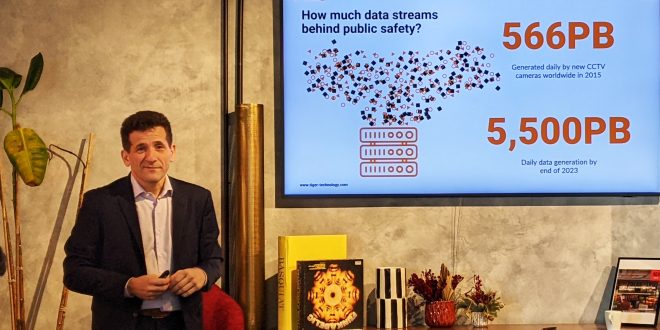
Alexander Lefterov of Tiger Technology talks to PCR about OPF hybrid data storage.
For years, migration to the cloud was hailed as the next great data storage thing. Businesses flocked to public cloud platforms, lured by promises of agility, elasticity, and scalability. Indeed, all of this, plus the cloud’s inherent resilience and global accessibility make it ideal for workloads requiring agility and elasticity – and cloud-based disaster recovery solutions can offer peace of mind, ensuring business continuity.
But it has become clear that the cloud, while powerful, isn’t always the perfect fit, and understanding of where – and why – data should reside is becoming a fundamental question for all businesses.
The rise of distributed hybrid infrastructure, where workloads are split between on-premises and cloud environments, demands a more flexible approach to data placement. New, data-hungry workloads such as artificial intelligence and analytics require specialised computing resources that may not be readily available in all clouds. Exponential data growth further complicates the equation, forcing businesses to optimise storage costs across diverse platforms – and the quest for operational excellence demands solutions that streamline data management regardless of location.
These factors are leading to a phenomenon known as ‘cloud repatriation’ or ‘de-clouding’,” where businesses are strategically moving data back from the cloud to on-premises or hybrid environments. This isn’t a rejection of the cloud’s power, but rather a recognition that a one-size-fits-all approach is rarely optimal and are often subject to high costs and vendor lock-in.
The future of data storage lies not in blind migration, but in conscious adoption. It’s about understanding the particular needs of each workload and choosing the environment that best supports its efficiency and security.
The on-premises-first (OPF) hybrid model is an infrastructure approach that prioritises continuity of on-premises workflows and treats the cloud as an enhancer that can be removed without disruption, rather than a primary enabler of digital transformation. OPF hybrid cloud enables organisations to preserve operations, applications, function, and performance while growing and transforming via cloud adoption.
Unlike cloud-first approaches, an on-premises-first strategy does not require moving all or even most of an organisation’s infrastructure to a cloud-computing platform nor does it create proprietary ecosystems. However, it can be used to ultimately make this shift to running operations entirely through cloud servers if such is the goal of the business. To put it simply, where cloud-first may feel like taking a leap towards modernisation, on-premises-first feels like making the jump with a safety net on.
Key benefits of OPF hybrid cloud include:
No Disruption – moving data to the cloud implies a disruption in multiple aspects of the business, which covers anything from security considerations, downtime/breaks in service, to staff having to adapt to a completely new way of working. From a technology standpoint, for example, moving to the cloud could mean not being able to preserve complex security controls and permissions set on organisational network shares by system administrators. With OPF hybrid, users continue to access the same file formats, based on the same permissions, in the same on-premises location, and work with files in the same way as before even though data is moved to cloud storage.
Flexibility and independence – a range of factors, such as the need for cost reduction, staff considerations, better functionality or performance found elsewhere, may prompt an organisation to change their data and storage strategy. This could mean switching from one cloud provider to another or wanting to return certain data sets and operations to on-premises environments. It is often hard or impossible to predict how the perceived business importance of such factors will change while still at the initial stages of digital transformation planning. OPF hybrid operates using open data formats to ensure that businesses remain flexible and can make the shift to a different operating model at any time. A lot of hybrid cloud solutions rely on proprietary systems and formats, which essentially means organisational data is tied to a certain vendor, and so it cannot be readily retrieved or migrated to a different vendor. This dependence is known as vendor lock-in, and it leads to substantial costs and complexities when retrieving data from the vendor. OPF hybrid ensures vendor independence, so organisations can switch to a different cloud platform that is better suited to their evolving needs and goals, adopt multi-cloud, or return to working with data locally at no added cost.
Low complexity – OPF hybrid puts a stop to spending on expensive and complex on-premises hardware environments and does not rely on setting up virtual appliances. Ideally OPF is delivered as a software-only service, making it as straightforward as possible to connect to the cloud. In addition, OPF hybrid does not require re-training staff to use a new proprietary ecosystem or significant cloud expertise as a prerequisite for adopting the cloud.
Cost optimisation – With its fundamental principle of storing data in its native format, OPF allows local storage to connect with object storage, any cloud provider and any cloud tier/storage class. This does not only add another layer of flexibility, but also allows businesses to substantially reduce storage costs by taking advantage of lower-cost cool and cold storage/archive tiers when it comes to infrequently accessed data. In addition, unlike traditional on-premises approaches, OPF hybrid eliminates the need for capital investment in local storage by using an OpEx model. This is especially useful for organisations that find it hard to predict their data growth patterns and so end up buying too much or not enough on-premises hardware during each cycle. Unlike Goldilocks, organizations may never get it ‘just right’ on premises. An OpEx model allows for increasing or decreasing storage capacity and associated costs on an as-needed basis – the business always pays just the right amount and as bonus does not have a growing, yet ageing hardware system to constantly deal with.
Tiger Technology helps businesses manage their data storage. It offers on-premises, hybrid, and cloud storage solutions and its products help businesses optimise their storage infrastructure, reduce costs, and ensure business continuity.